
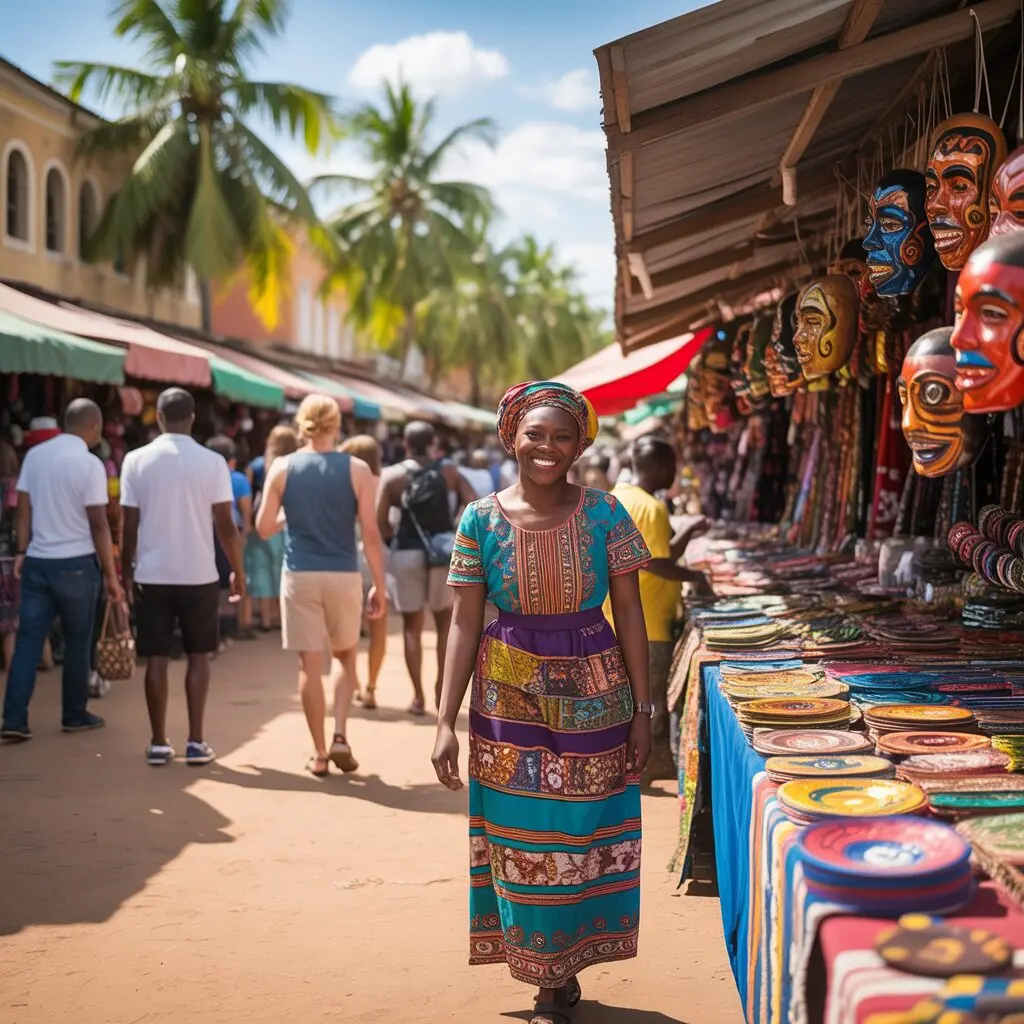
Once your Benin eVisa is approved and your flights are booked, the real excitement begins. This travel guide covers everything you need to know about visiting Benin – from the best time to go and what to pack, to safety tips, transportation, currency, and the must-see destinations that make this West African nation a truly unique travel experience.
Best Time to Visit Benin
Benin’s tropical climate creates two distinct seasons that significantly impact your travel experience. Choosing the right time to visit ensures you get the most from your trip.
Dry Season (November to March)
The dry season is the most popular and generally the best time to visit Benin:
- Temperature: Warm and comfortable, ranging from 25-35 degrees Celsius (77-95 degrees Fahrenheit)
- Rainfall: Minimal to none, with clear blue skies most days
- Humidity: Lower than the rainy season, making outdoor exploration comfortable
- Roads: Dry and passable, including rural roads to national parks and remote villages
- Wildlife: Animals congregate around water sources in Pendjari National Park, making game viewing excellent
The harmattan wind period (December to February) brings cool, dry air from the Sahara Desert. Mornings and evenings can be surprisingly cool (15-20 degrees Celsius), while afternoons remain warm. The harmattan creates a dusty haze that reduces visibility but adds a unique atmospheric quality to the landscape.
Rainy Season (April to October)
The rainy season brings heavy downpours, particularly in June and July:
- Temperature: Warm and humid, 23-30 degrees Celsius
- Rainfall: Heavy, often in afternoon thunderstorms that clear by evening
- Humidity: Very high, often exceeding 80%
- Roads: Rural roads may become impassable, limiting access to some attractions
- Vegetation: Lush and green, creating beautiful landscapes
The rainy season has its advantages: fewer tourists, lower prices on accommodation, and the dramatic beauty of the tropical landscape in full bloom. However, access to northern destinations like Pendjari National Park may be restricted.
Festival Calendar
Benin’s cultural calendar offers compelling reasons to visit at specific times:
| Festival | When | Where | What to Expect |
|---|---|---|---|
| Vodun Festival | January 10 | Ouidah | Massive celebration of Vodun (Voodoo) heritage with ceremonies, dancing, and music |
| International Festival of Abomey | Variable | Abomey | Cultural performances at the Royal Palaces |
| Quintessence Festival | December | Ouidah | Film festival celebrating African cinema |
| Festival International de Porto-Novo | Variable | Porto-Novo | Arts, music, and cultural performances |
| Gelede Festival | Variable | Ketou | Traditional mask dances honoring feminine power |
The Vodun Festival on January 10 is the most significant cultural event, drawing thousands of visitors to Ouidah for ceremonies, processions, and celebrations that are genuinely unique to Benin.
Safety Tips for Travelers
Benin is widely regarded as one of the safest countries in West Africa for international tourists. However, like any destination, sensible precautions ensure a trouble-free trip.
General Safety
- Political stability: Benin has a stable democratic government and is considered politically safe for travelers
- Crime: Petty theft and pickpocketing can occur in crowded markets and urban areas – keep valuables secure and out of sight
- Scams: Be cautious of overly friendly strangers offering unsolicited help or guide services, particularly around tourist sites and airports
- Transport safety: Use registered taxis or reputable ride services rather than accepting rides from strangers
Urban Safety (Cotonou and Porto-Novo)
- Walk confidently and be aware of your surroundings, especially in busy market areas like Dantokpa Market in Cotonou
- Avoid displaying expensive jewelry, cameras, or large amounts of cash openly
- At night, use registered taxis rather than walking in unfamiliar neighborhoods
- Keep hotel room doors locked and use the safe for valuables
- Zemidjan (motorcycle taxi) rides require reasonable caution – hold on firmly and ensure the driver provides a helmet
Regional Safety Considerations
The northern regions of Benin, particularly areas near the borders with Burkina Faso and Niger, may have elevated security concerns related to regional instability. Before traveling to the far north:
- Check your government’s latest travel advisory for Benin
- Consider traveling with a reputable tour operator for northern excursions
- The Pendjari National Park area has increased security measures and is generally safe for organized safaris
- Avoid traveling after dark in rural areas
Health Safety
- Yellow fever vaccination is mandatory – carry your yellow card at all times
- Malaria prevention: Take antimalarial medication as prescribed, use insect repellent, and sleep under treated bed nets
- Water safety: Drink only bottled or purified water; avoid ice in drinks unless you are certain it is made from purified water
- Food safety: Eat at busy, popular restaurants and food stalls where high turnover ensures freshness. Avoid raw vegetables washed in untreated water.
- Sun protection: The tropical sun is intense – use SPF 50+ sunscreen, wear a hat, and stay hydrated
Getting Around Benin
Transportation in Benin ranges from modern options in Cotonou to more adventurous choices in rural areas. Understanding your options helps you navigate the country efficiently.
Cotonou Transport
Cotonou, Benin’s largest city and economic hub, has several transport options:
- Zemidjans (motorcycle taxis): The most common and affordable way to get around Cotonou. Negotiate the fare before starting your ride. Short trips cost around 150-300 XOF ($0.25-$0.50 USD). Always insist on a helmet.
- Taxis: Regular taxis are available throughout the city. Agree on the fare before departure as most do not use meters. Expect to pay 1,000-3,000 XOF ($1.50-$5 USD) for trips within Cotonou.
- Car rental with driver: Available through hotels and rental agencies. This is the most comfortable option for tourists and costs approximately 25,000-50,000 XOF ($40-$80 USD) per day including the driver.
- Ride-hailing apps: Limited but growing availability in Cotonou.
Inter-City Transport
Getting between Benin’s cities and towns:
- Shared taxis (gbakas): The primary inter-city transport. These leave from designated taxi stations when full (typically 4 passengers). Major routes include Cotonou-Porto-Novo (30 minutes), Cotonou-Parakou (6-8 hours), and Cotonou-Natitingou (10-12 hours).
- Bush taxis: Larger shared vehicles for longer distances. Less comfortable but cheaper than gbakas.
- Buses: The government-run bus service connects major cities with more comfort and reliability than shared taxis, though with less frequent schedules.
- Domestic flights: Limited domestic air service connects Cotonou with Parakou.
- Boats: Pirogues (wooden boats) operate on Lake Nokoue, the Oueme River, and coastal lagoons, providing transport to destinations like Ganvie.
Driving in Benin
If you prefer self-driving:
- An International Driving Permit (IDP) is recommended alongside your home country license
- Driving is on the right side of the road
- Road conditions vary significantly – major highways are generally good, while rural roads range from decent to very poor, especially in the rainy season
- Speed limits are typically 50 km/h in cities and 90-120 km/h on highways
- Night driving is discouraged outside major cities due to poor lighting, unexpected road hazards, and limited emergency services
Currency and Money in Benin
Understanding the CFA franc (XOF) and how to handle money in Benin prevents financial headaches during your trip.
The West African CFA Franc
Benin uses the Communaute Financiere Africaine (CFA) franc, which is pegged to the Euro at a fixed rate:
- Exchange rate: 1 EUR = 655.957 XOF (fixed rate)
- Approximate USD rate: 1 USD = approximately 580-620 XOF (varies with EUR/USD exchange rate)
- Denominations: Coins (1, 2, 5, 10, 25, 50, 100, 200, 250, 500 XOF) and notes (500, 1,000, 2,000, 5,000, 10,000 XOF)
The CFA franc is used by 8 West African countries (including Benin, Senegal, Cote d’Ivoire, Mali, Niger, Burkina Faso, Togo, and Guinea-Bissau), so any leftover notes from Benin can be used in these countries.
Accessing Money
- ATMs: Available in Cotonou, Porto-Novo, Parakou, and other major cities. Visa cards are more widely accepted than Mastercard at ATMs. Withdrawal limits are typically 100,000-200,000 XOF per transaction.
- Credit cards: Accepted at upscale hotels, international restaurants, and some shops in Cotonou. Always carry cash as backup.
- Currency exchange: Exchange Euros or US Dollars at banks and licensed bureaus de change in Cotonou. Euros generally get the best rates.
- Mobile money: MTN Mobile Money and Moov Money are widely used in Benin but require a local SIM card to set up.
Tipping Culture
Tipping is appreciated but not strictly expected in Benin:
- Restaurants: 10% is generous; rounding up the bill is common
- Hotel staff: 1,000-2,000 XOF per day for housekeeping
- Tour guides: 5,000-10,000 XOF per day depending on the tour
- Taxi drivers: Rounding up to the nearest convenient amount
- Zemidjan drivers: No tip expected; negotiate fare beforehand
Top Destinations in Benin
Benin offers an extraordinary range of cultural, historical, and natural attractions that make it one of West Africa’s most rewarding destinations.
Ganvie – The Floating Village
Ganvie is the world’s largest lake village, home to approximately 20,000 people living in wooden stilt houses on Lake Nokoue. Founded in the 16th or 17th century by the Tofinu people fleeing slave raiders, Ganvie has evolved into a thriving community with floating markets, schools, and even a mosque.
- Location: Lake Nokoue, about 1 hour from Cotonou
- How to visit: Hire a pirogue (wooden boat) from the village of Abomey-Calavi
- Best time: Early morning for the floating market atmosphere
- Duration: Half-day trip from Cotonou
Royal Palaces of Abomey
The Royal Palaces of Abomey are a UNESCO World Heritage Site showcasing the powerful Kingdom of Dahomey, which dominated the region from the 17th to 19th century. The palaces feature remarkable bas-relief murals depicting the kingdom’s history and are home to a museum with royal thrones, weapons, and ceremonial objects.
- Location: Abomey, about 3 hours north of Cotonou
- How to visit: Guided tours available at the site
- Duration: Half day to full day
Ouidah – The Slave Route and Python Temple
Ouidah is one of the most historically significant cities in West Africa, serving as a major departure point for the transatlantic slave trade. The Route des Esclaves (Slave Route) is a 4-kilometer path from the city to the coast, lined with memorial sculptures and ending at the Door of No Return on the beach.
Ouidah is also the spiritual center of Vodun (the original religion from which “Voodoo” derives). The Python Temple houses dozens of royal pythons that are considered sacred and freely roam the temple.
- Location: About 1 hour west of Cotonou along the coast
- How to visit: Easily accessible by taxi or organized tour
- Duration: Full day recommended
Pendjari National Park
Pendjari National Park in northern Benin is one of West Africa’s last remaining wildlife strongholds. The park is home to elephants, hippos, lions, cheetahs, buffalo, various antelope species, and over 300 bird species.
- Location: Northwestern Benin, near the Burkina Faso border
- Best time: December-May (dry season) when animals concentrate around water
- How to visit: Fly to Natitingou or drive from Cotonou (10-12 hours); lodges and camps available
- Duration: 2-3 days minimum recommended
Porto-Novo
Benin’s official capital, Porto-Novo, is a charming city with a rich colonial heritage, excellent museums, and vibrant markets:
- Musee Honme: Royal palace museum with Dahomey Kingdom artifacts
- Musee da Silva: Afro-Brazilian heritage museum
- Central Mosque: Beautiful example of Afro-Brazilian architecture
- Marche Oueme: Large market selling everything from fabrics to traditional medicines
Tata Somba (Near Natitingou)
The Tata Somba (also called Tata Batammariba) are remarkable two-story fortified houses built by the Somba people in the Atacora region. These UNESCO-recognized structures are living architectural masterpieces – some are still inhabited. The upper floor serves as a bedroom and granary, while the ground floor houses livestock and serves as a kitchen.
Accommodation Options
Benin offers accommodation for every budget:
| Type | Price Range (USD/night) | Where to Find |
|---|---|---|
| Budget guesthouses | $10-$25 | All cities and towns |
| Mid-range hotels | $30-$80 | Cotonou, Porto-Novo, Natitingou |
| Upscale hotels | $80-$200 | Cotonou |
| Eco-lodges | $40-$150 | Pendjari, Natitingou area |
| Airbnb/apartments | $20-$100 | Cotonou, Porto-Novo |
Book in advance during peak season (December-January) and around major festivals, as the best properties fill up quickly.
Food and Drink
Beninese cuisine reflects the country’s rich cultural heritage:
- Pate: The staple food – a smooth dough made from corn, millet, or cassava, served with various sauces
- Sauce d’arachide: Rich peanut sauce, often served with pate and chicken or fish
- Grilled fish: Fresh from the coast, particularly good in Ouidah and along the lagoons
- Fried plantains: A ubiquitous and delicious side dish
- Tchoukoutou: Traditional millet beer, naturally fermented
- Flag and La Beninoise: Local beers brewed in Benin
For international cuisine, Cotonou offers French restaurants, Lebanese eateries, Chinese food, and Italian options.
What to Pack
A smart packing list for Benin includes:
Essentials
- Passport and printed eVisa (2 copies)
- Yellow fever vaccination certificate (original)
- Travel insurance documents
- Cash (Euros or US Dollars for exchange)
- Debit/credit cards
- Phone and charger (Benin uses Type C and E European-style plugs, 220V)
Health Items
- Antimalarial medication (start before travel as prescribed)
- Insect repellent with DEET (20-30%)
- Sunscreen SPF 50+
- Basic medical kit (anti-diarrhea, rehydration salts, band-aids, antiseptic)
- Hand sanitizer
Clothing
- Lightweight, breathable clothing (cotton or linen)
- Long sleeves and pants for evening mosquito protection
- A light sweater or jacket for harmattan season cool mornings
- Comfortable walking shoes and sandals
- Modest clothing for visiting religious sites
- Rain jacket or compact umbrella (if visiting during rainy season)
Useful Extras
- Power bank for charging devices on the go
- Small flashlight (power outages can occur)
- Binoculars for wildlife viewing in Pendjari
- Camera with extra batteries
- Copies of all important documents (digital and paper)
Frequently Asked Questions About Traveling to Benin
Last updated: July 2026. Travel conditions are subject to change. Check current advisories before your trip.